Our Famous RCA Dogs
The iconic “RCA dogs” symbolize RCA’s long heritage and the warm, youthful energy unique to our brand. Their unmistakable image helped make RCA one of the most recognized brands of the 20th century.
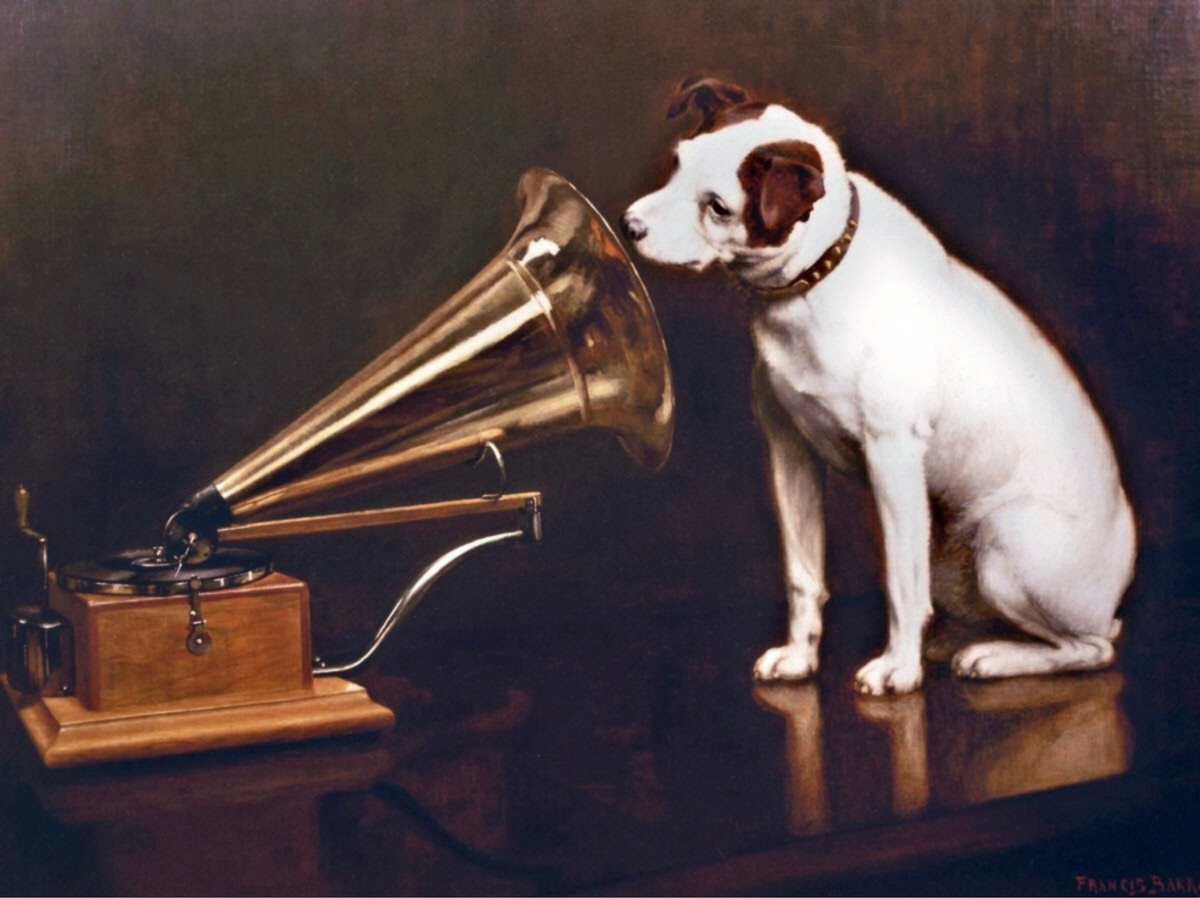
Nipper, a terrier mix from Bristol, England, earned his name from his habit of nipping at visitors’ ankles. Artist Francis Barraud painted him listening to a phonograph, inspired by his dog’s charming curiosity about recorded sound.
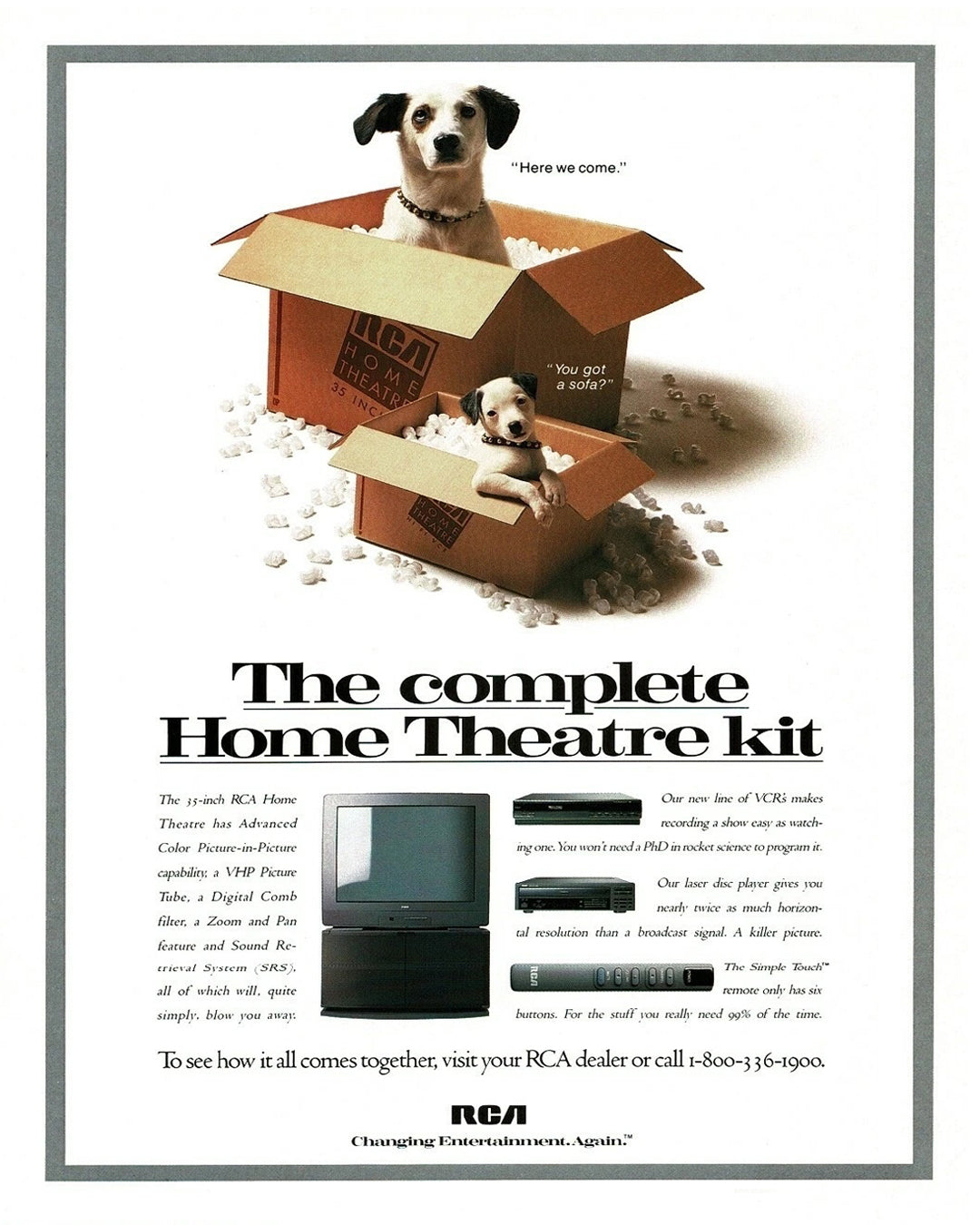
RCA introduced Chipper, a playful puppy, in 1990. Together, the RCA dogs linked more than a century of audio innovation with warmth, curiosity, trust, and family appeal.
A History of Nipper & Chipper
1884
His Master's Voice
The RCA dog Nipper (1884–1895) originally belonged to Mark Barraud, a theatrical scenery designer in London. Born in Bristol, England, Nipper often appeared in accounts as a fox terrier, though he was probably a terrier mix with some bull terrier ancestry. Some sources have identified him as a Jack Russell terrier. He reportedly earned his name from his habit of nipping at visitors’ legs as a puppy, although that story may be fanciful.
After Mark died unexpectedly in 1887, his brother, painter Francis Barraud (1856–1924), took Nipper home with him to Liverpool. Francis’s original painting, titled Dog Looking at and Listening to a Phonograph, depicted Nipper peering into the horn of an Edison-Bell cylinder phonograph.
1899
A Commercial Ad
Thinking commercially and noting that the “Nipper” dog was listening to an Edison Bell cylinder, Barraud wrote to the Edison Bell Company in New Jersey and proposed that it use the painting in its advertisements. The company’s representatives failed to see how the painting could help sales and turned down his offer. They concluded, logically if unimaginatively, that dogs do not listen to phonographs.
Friends liked the painting and suggested that Barraud make it more appealing by substituting a gold horn for the black Edison horn. Barraud liked the idea but needed a gold horn to use as a model for the new version of the painting. To find a model piece, he visited Barry Owen, manager of Liverpool’s newly formed Gramophone Company, who understood the work's commercial possibilities.
Owen offered to buy the painting and its rights if Barraud depicted a record gramophone instead of a cylinder phonograph, which Barraud did. They reached an agreement for both the painting and its copyright, and sealed the deal when Barraud delivered the painting in October 1899.
1929
From Victor to RCA
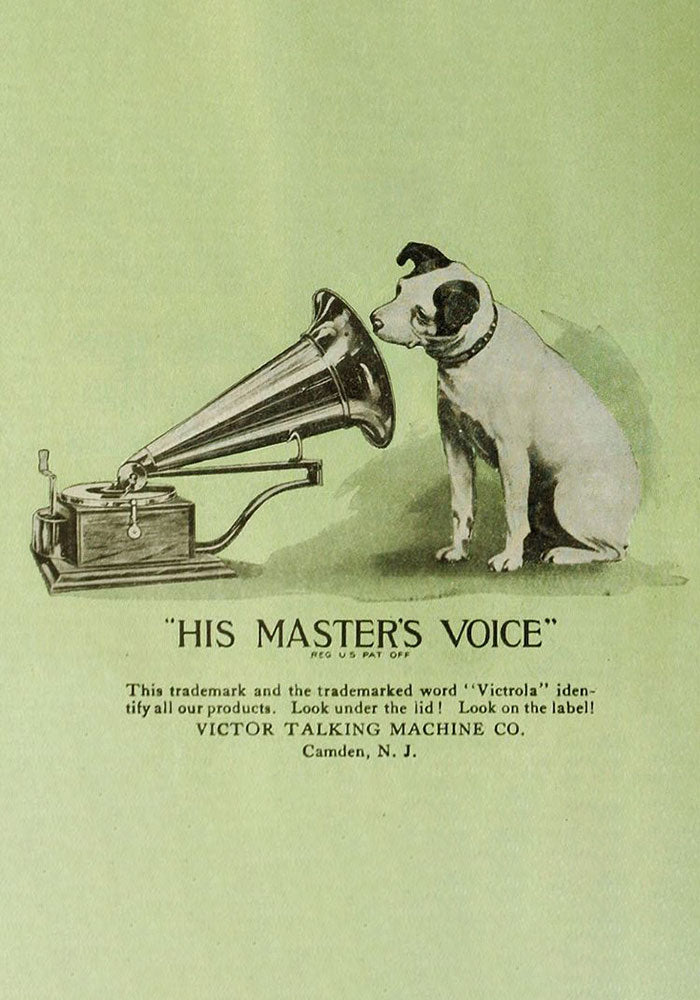
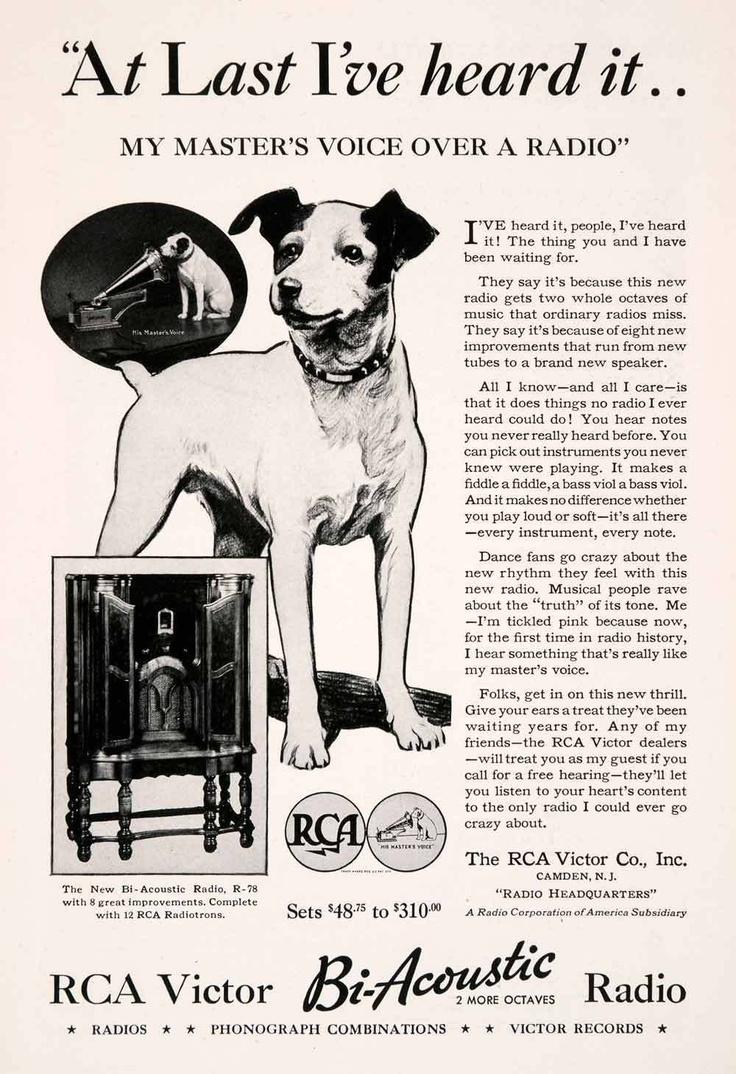
At first, the Gramophone Company Ltd. of London used the image sparingly in England. Emile Berliner (1851–1928), the American inventor of the gramophone, later spoke with Owen about assigning him the U.S. rights to use the image. Owen agreed. In the United States, Berliner worked with the Victor Talking Machine Company, which manufactured the Victrola.
In 1929, RCA acquired the American rights when the company became RCA-Victor, known for radios as well as phonographs and records. The Nipper trademark became widely recognized through its association with the Victrola, RCA-Victor and, eventually, the RCA Company. The RCA dog Nipper thus gained recognition on both sides of the Atlantic. By the mid-20th century, the inquisitive terrier had become so famous that RCA erected a four-ton, 26-foot-tall Nipper atop its headquarters in Albany, New York, where it remains a beloved city landmark.
1991
RCA Technology: Even Your Dog Can Use It
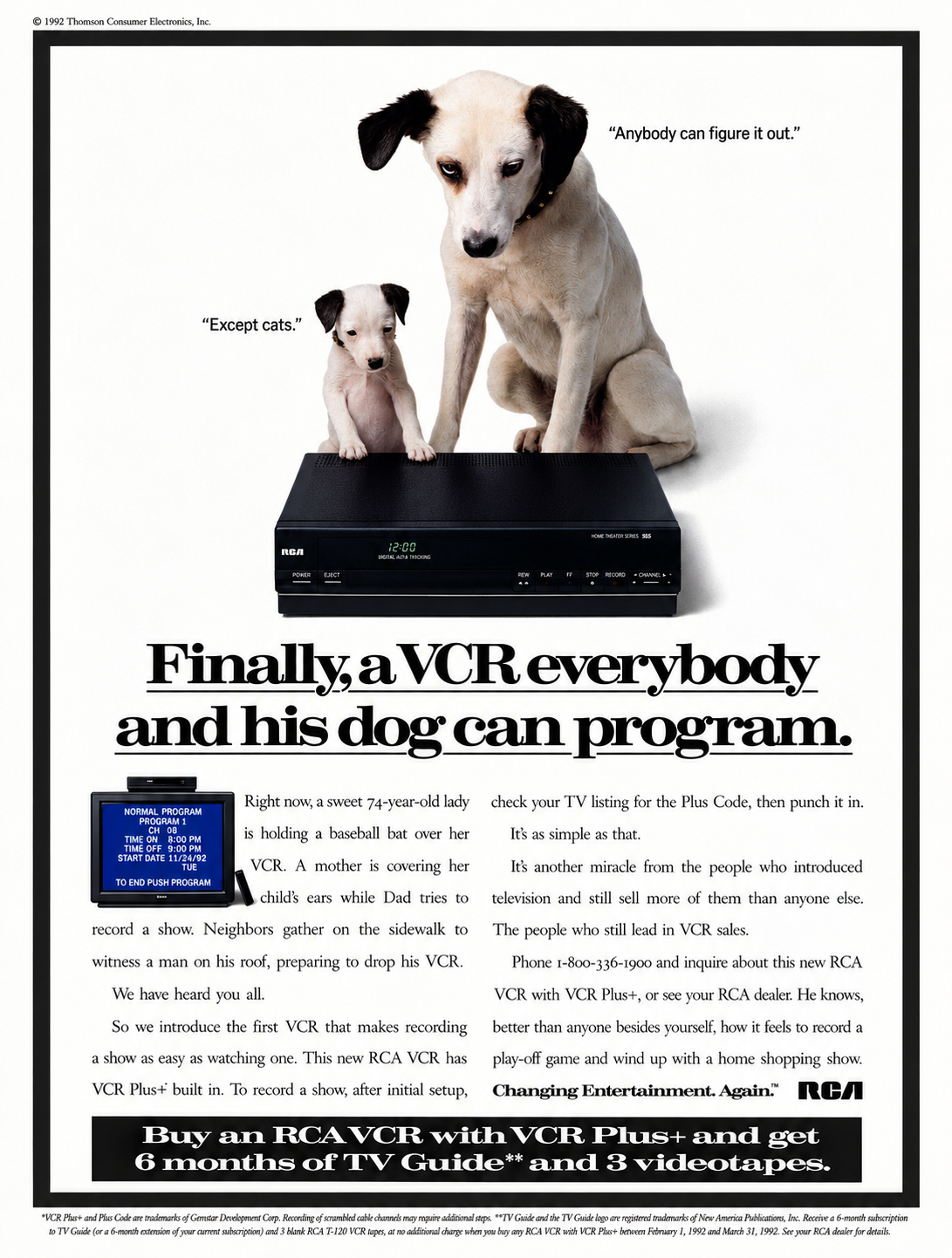
In a major fall 1991 advertising campaign, RCA declared war on the confusing terminology surrounding advanced technology. “Chipper” played a major role in this assault on tech jargon.
Throughout the Christmas sales season, the campaign’s television commercials and print ads reassured prospective buyers that RCA consumer electronics made advanced technology easier to use with built-in features, leaving users with fewer buttons and gadgets to manage.
“Finally, a VCR everybody and his dog can program,” read the headline of one print ad. “At last, technology that serves man,” read another. “If your VCR is a pain to program, then get rid of it,” an announcer said in one commercial.
Research showed that the combination of the older “Nipper” and the younger “Chipper” helped position RCA products as contemporary yet traditional. Consumers believed that “Nipper” and “Chipper” should continue telling the RCA brand’s story.
1990
Then Came Chipper
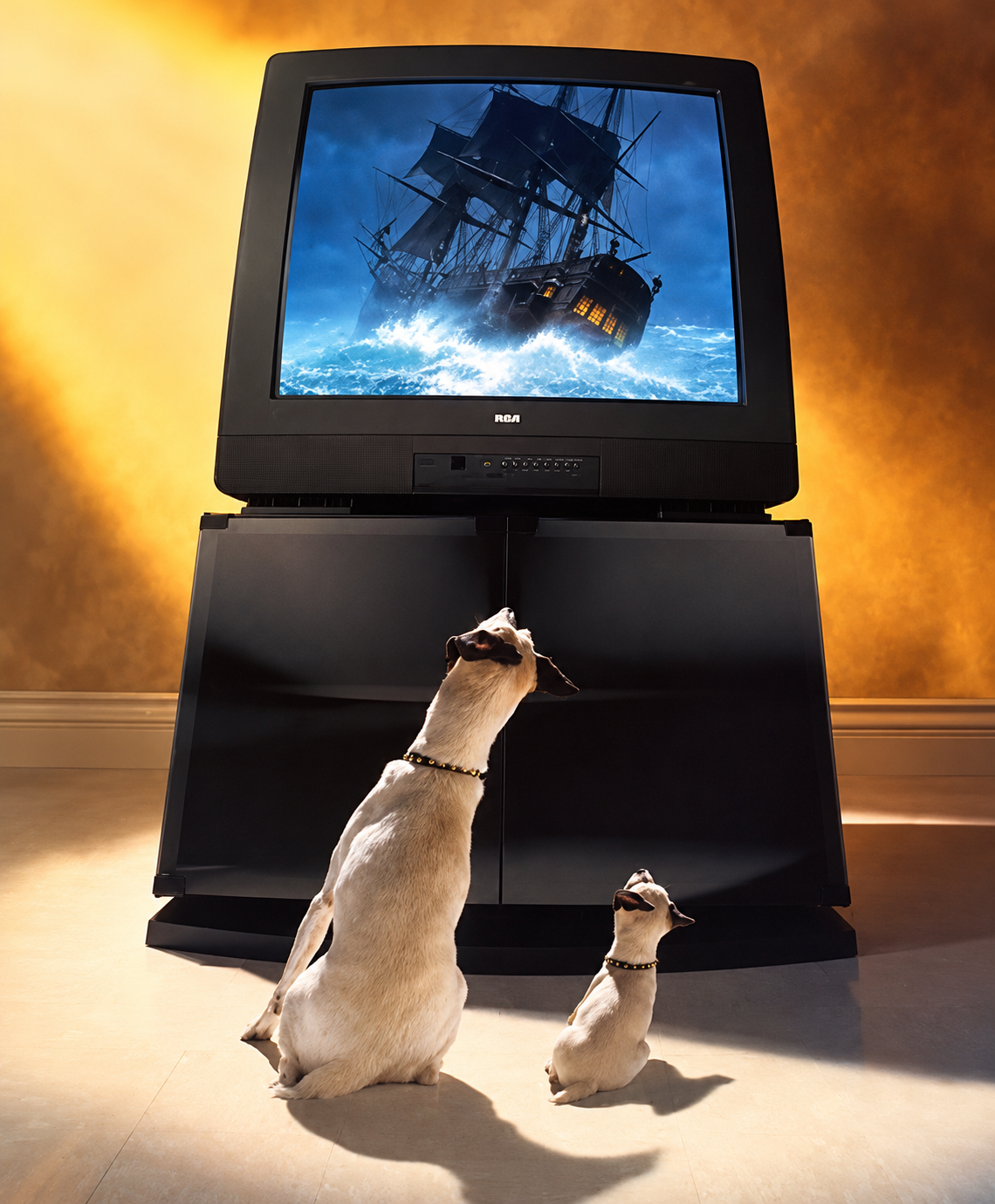
In 1990, advertising agency Ammirati & Puris (A&P) mixed the old with the new to give the RCA brand a refreshed image and a much-needed boost. A&P brought back “Nipper,” the familiar dog who had appeared in RCA advertisements since 1929. To showcase RCA’s next generation of products and complement Nipper, the agency introduced a young Jack Russell terrier puppy called “Little Nipper.”
In 1991, RCA sponsored a contest to name the puppy. “Chipper” won because the name suggested several ideas: a computer chip, a chip off the old block, and a happy, upbeat personality. It also rhymed with “Nipper.”
As the next canine generation, Chipper did not stare at gramophones in advertisements. Instead, he enjoyed the latest advanced electronics. Chipper represented the advanced technology, design and innovation behind RCA products. He conveyed a modern, up-to-date image, while Nipper represented the enduring, reliable company that invented color television.
The puppy embodied youth and energy, with television advertisements showing him skydiving and skateboarding. In 1995, A&P created a major U.S. advertising campaign for the launch of RCA’s Digital Satellite System (DSS). The campaign featured Nipper and Chipper across television commercials, magazine advertisements and in-store displays. Time magazine hailed the RCA DSS campaign as “the most successful new product launch of the year.”
2022
RCA’s K9 Legacy Finds a New Purpose
Dogs have played a special role in RCA’s history for more than a century. Nipper became a symbol of trust and attentive listening, while Chipper brought a playful, modern spirit to the brand.
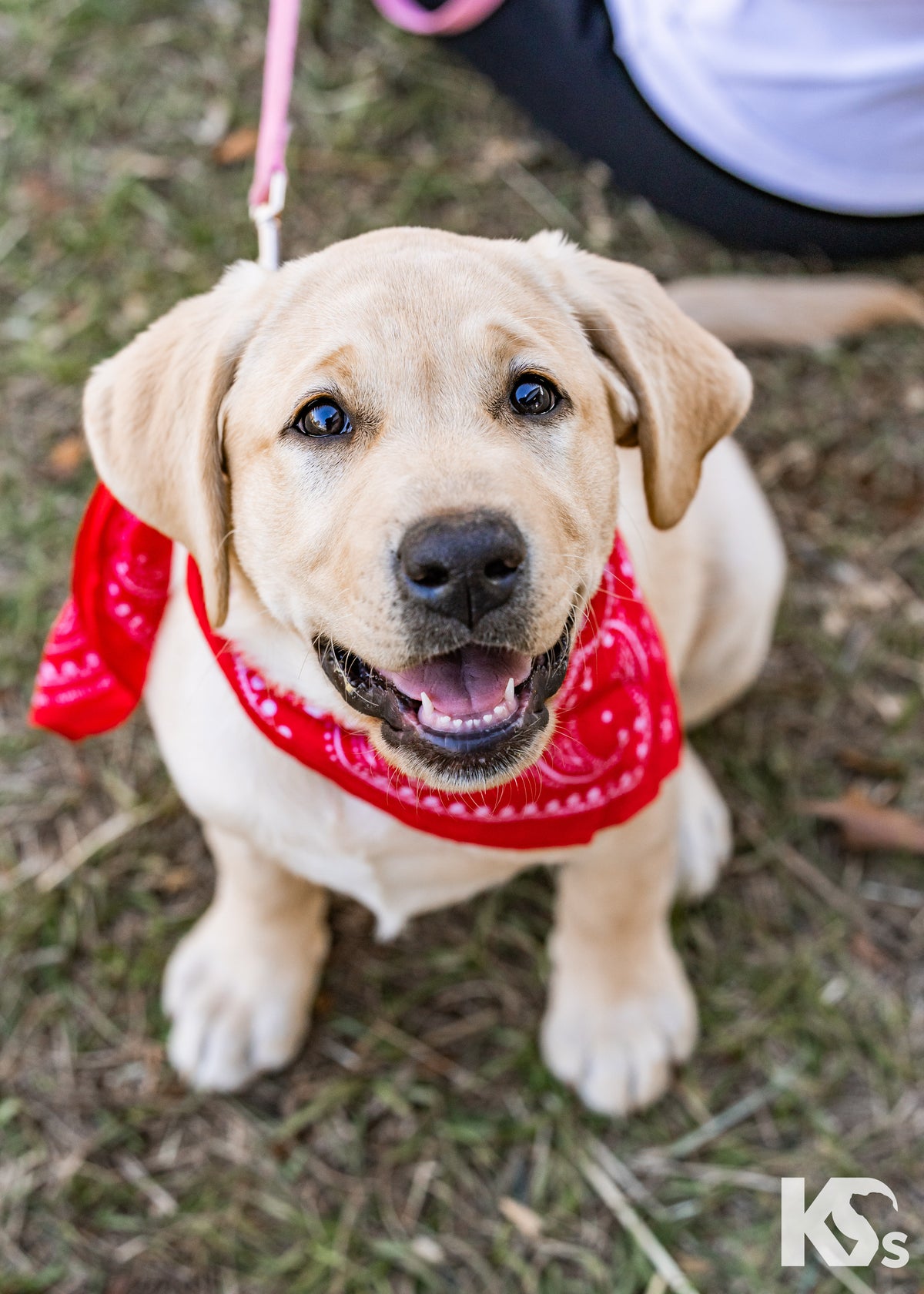
Today, RCA gives that canine legacy a new purpose through its partnership with K9s For Warriors. Each year, RCA sponsors the training of a new service dog who will help a veteran living with service-related trauma regain confidence, independence and a greater sense of security and love.